
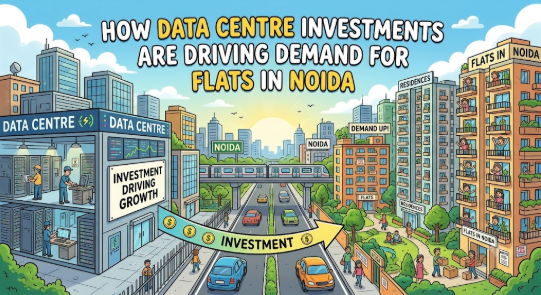
Noida is entering a technology-led growth phase. A May 2026 Pulse of Noida report says plans for eight data centre parks across Noida, Greater Noida and the Yamuna Expressway region involve an estimated ₹2 lakh crore investment and could generate more than 50,000 jobs. This is creating a new housing demand story for flats in Noida.
Why is Data Centre Growth Changing Housing Demand?
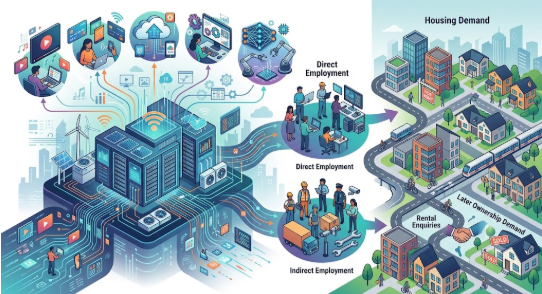
Data centres support cloud computing, digital payments, streaming, enterprise systems and artificial intelligence. Their expansion requires data engineers, cloud specialists and operations teams. Construction, security, logistics and maintenance also create indirect employment.
When technology companies and supporting businesses establish around major infrastructure projects, employees need homes within practical commuting distances. This can increase rental enquiries and later ownership demand.
Where is Noida’s Data Centre Growth Happening?
The ecosystem is spreading across Sector 62, the Noida-Greater Noida Expressway and the Yamuna Expressway.
The Expressway connects employment clusters with residential communities, while Greater Noida and the Yamuna Expressway offer larger land parcels for major infrastructure.
The strongest housing impact will appear where data centre employment overlaps with established neighbourhoods, convenient commuting options, and services for professionals and families.
For builders, this creates opportunities to develop flats in Noida near employment hubs instead of relying on traditional demand.
Which Companies are Strengthening the Ecosystem?
HCLTech, Adani Group, NTT Data, Yotta Infrastructure, Sify Technologies and Panasonic are among companies linked to the expanding data ecosystem. It also highlights potential expansion by global cloud companies such as Microsoft and Google as cloud and AI demand increases.
This broader mix matters for housing. A single data centre may create limited direct employment, but an ecosystem of technology and support companies can create a larger residential catchment.
How Will AI Investments Affect Housing Demand?
The data centre story is increasingly connected with artificial intelligence. The report highlights a proposed $25 billion AI-focused data centre project in Greater Noida, designed to provide large-scale computing capacity using cleaner energy sources.
LG Corporation has also announced plans for a ₹1,000 crore R&D facility in Noida, expected to create hundreds of jobs. These developments point toward higher-value technology employment.
This could increase demand for quality flats in Noida near workplaces and transport links.

What Does 50,000-plus Jobs Mean for Housing?
The projected jobs will not equal housing demand. Some employees already live in NCR, while others may commute from Delhi or nearby areas.
Some employees may eventually shift from renting to purchasing.
This creates three potential stages:
- Family Housing: Relocated employees may seek larger homes near schools and healthcare
- Ownership Demand: Long-term workers may eventually purchase residential properties
What Should Builders Do Differently?
Builders should follow employment growth, not announcements alone. Projects near transport, workplaces and essential services could be better positioned.
Product mix matters. Young technology professionals may prefer compact homes, while families may seek larger apartments, green spaces and community amenities.
Developers should consider rental suitability because early demand may come from new employees.
What are the Risks for Buyers?
Data centre growth is promising, but it does not automatically guarantee appreciation. Proposed investments can take time to become operational.
Buyers should assess connectivity, approvals, possession, amenities, builder reputation and rental activity before purchasing flats in Noida.
FAQs
Does data centre growth increase housing demand?
Yes, it can. Data centres create direct and indirect employment, while technology ecosystems attract professionals needing rental and ownership housing.
Which Noida areas could benefit from data centre growth?
Sector 62, the Noida-Greater Noida Expressway and Yamuna Expressway are highlighted as important growth areas, although benefits can spread to surrounding markets.
Will AI investment create more housing demand?
Potentially. Large AI infrastructure projects and technology R&D facilities can create specialised employment, supporting demand for nearby flats in Noida.
Should buyers invest near a data centre?
Proximity can help, but buyers should consider the complete ecosystem. Connectivity, amenities, project quality, employment density and rental demand matter more than announcements alone.
Conclusion
Noida’s data centre boom is becoming a housing story because digital infrastructure is creating employment, business activity and technology clusters. The reported ₹2 lakh crore investment pipeline, eight planned data centre parks and potential creation of more than 50,000 jobs give this trend scale.
For builders, the opportunity is to match housing supply with employment corridors and flats in Noida with actual job locations. For buyers, the focus should be on locations where jobs and infrastructure develop together. As Noida strengthens its digital economy, flats in Noida could benefit from a more employment-driven residential market.